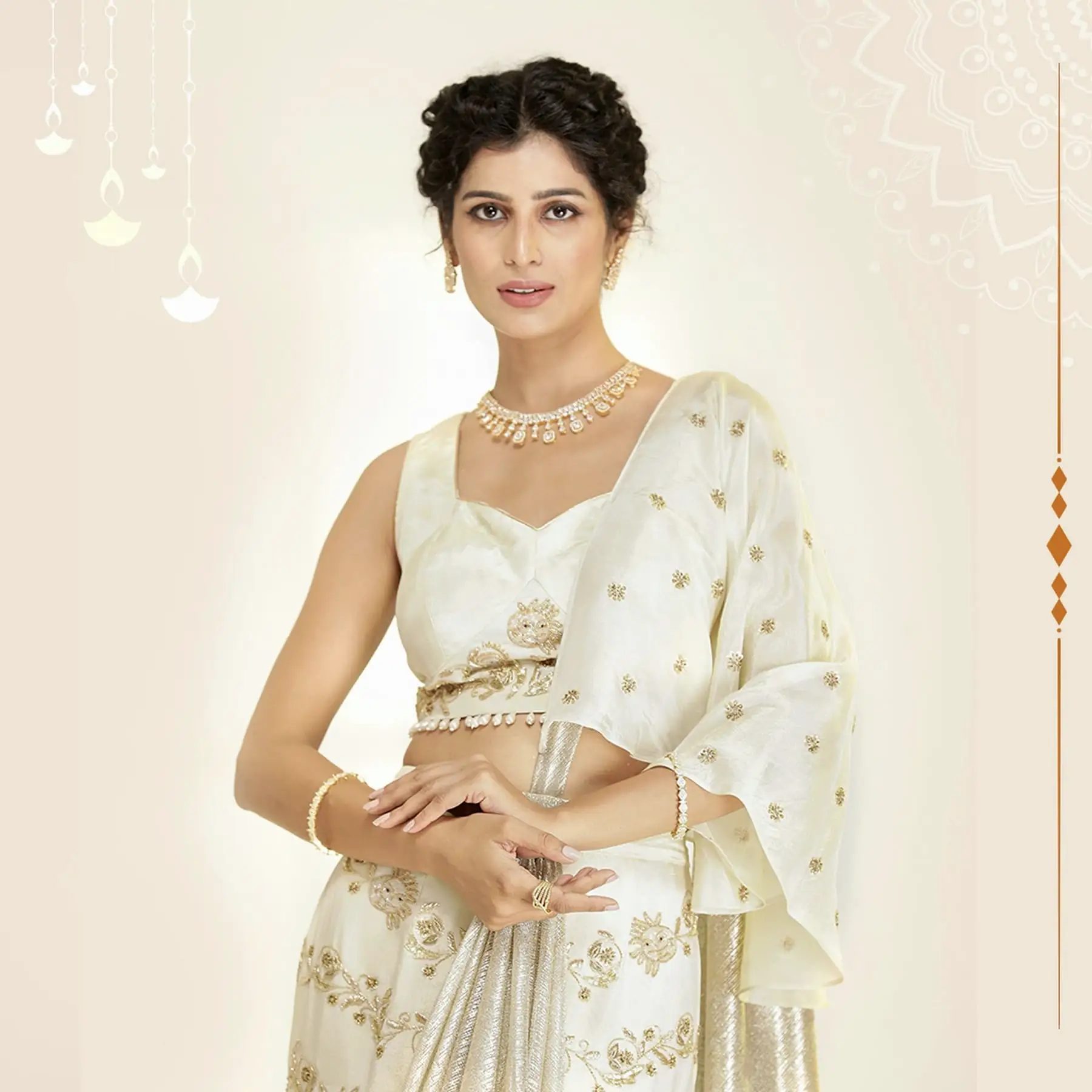
Chikankari
Fine white-on-white shadow and knot stitching.
चिकनकारी
What it is
Chikankari is a delicate embroidery, traditionally worked in white thread on light, fine cloth. It relies on texture rather than colour: tiny knots, open-work jaali and shadow stitches that show through the fabric as soft outlines.
More than thirty stitches are described in the tradition. Each has its own job, from filling petals to forming lattice.
How it is made
- 1PrintA pattern is stamped onto the cloth with a washable dye, using carved wooden blocks.
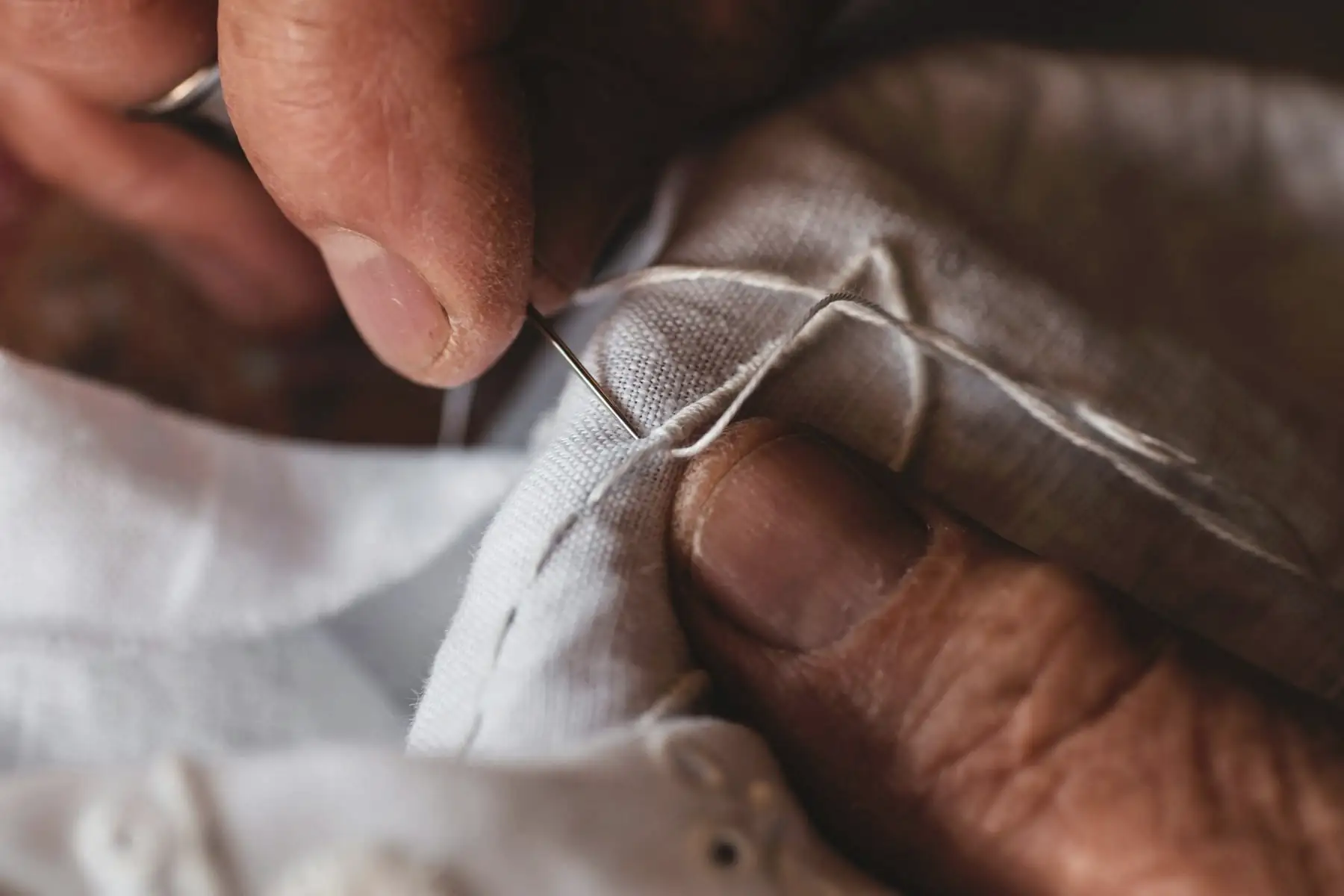
- 2OutlineThe outlines are worked in a fine stem or back stitch.
- 3Shadow workA closely worked stitch on the reverse of sheer fabric creates the soft shadow seen from the front.
- 4Knots and fillsSmall knotted stitches form buds and centres. Petals are filled with flat stitches.
- 5JaaliThreads are drawn apart and held with tiny stitches to make open lattice.
- 6WashThe finished cloth is washed to remove the printing dye and set the stitches.
The tradition
Chikankari is associated with Lucknow and its surrounding region, and is often traced to Mughal-era patronage. Much of the work has traditionally been done by women working in their homes, in a skill handed down through families.
How to recognise quality
- The reverse is almost as neat as the front.
- Stitches of the same kind are the same size.
- No traces of blue or purple printing dye remain.
- Jaali openings are even and the cloth does not distort around them.
Care
- Gentle hand wash in cool water with mild soap, or dry clean.
- Do not wring or twist.
- Dry in shade. Press on the reverse while slightly damp.