Zardozi
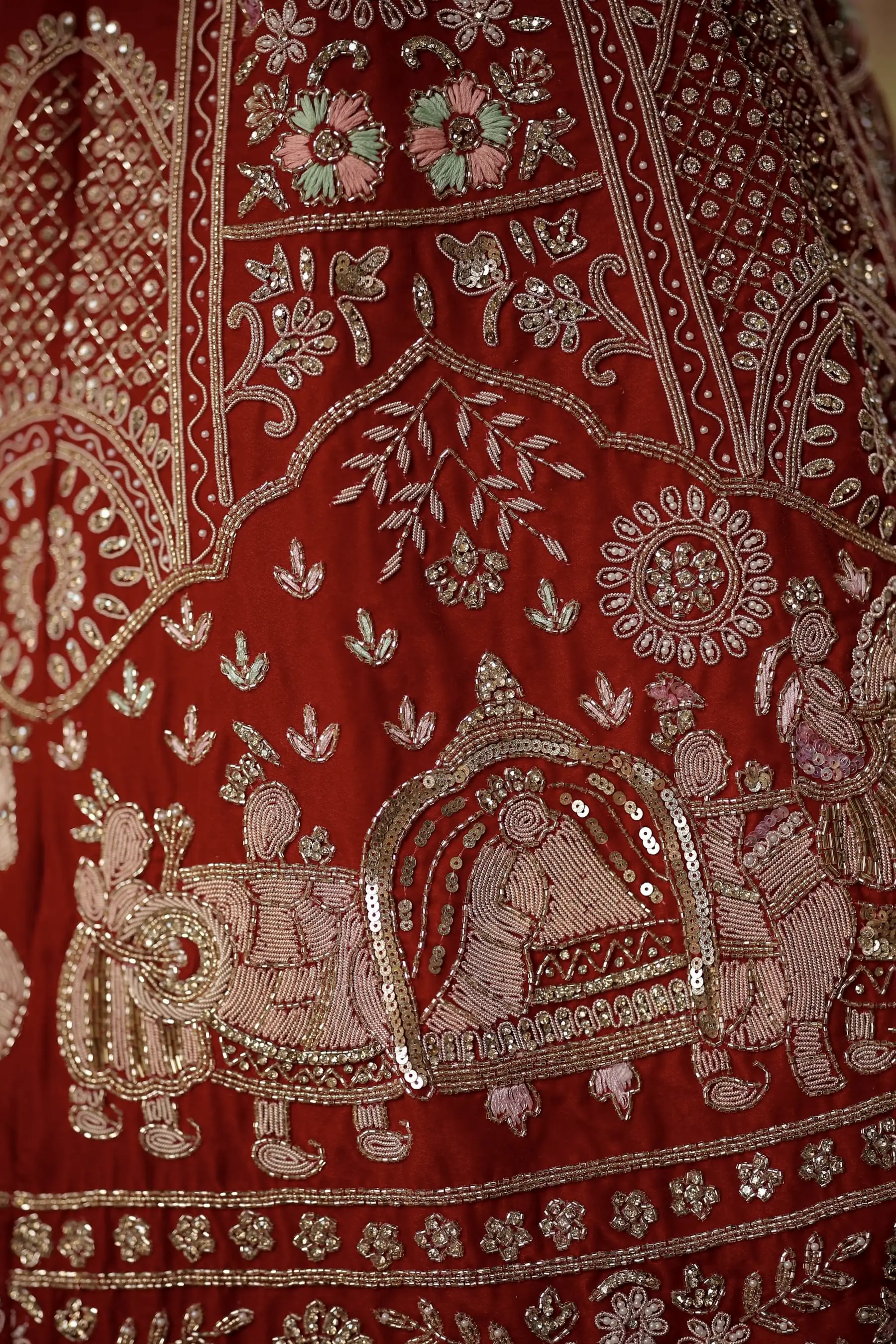
Raised embroidery in metallic thread, wire, sequins and pearls.
ज़रदोज़ी
What it is
Zardozi is a heavy, raised embroidery. The name joins the Persian words zar, gold, and dozi, sewing. Metallic wire and thread are laid onto the cloth in coils, curves and filled shapes, often with sequins, beads and pearls.
It is slow work. A hand-sized motif can take days. The result has weight and depth that flat embroidery cannot match, and it catches light from every angle.
How it is made
- 1DrawThe design is traced onto the cloth, usually with a washable dye through a pricked paper pattern.
- 2FrameThe fabric is stretched taut on a wooden frame, called an adda, so it does not pucker under the weight of the metal.
- 3Lay the outlineMetallic wire is couched along the outline: held down with tiny stitches of fine thread at regular intervals.
- 4FillCoiled wire, flat strips, sequins and beads fill the shapes. Each element is stitched individually.
- 5FinishThe piece is checked against the light, loose ends are secured on the reverse, and the cloth is released from the frame.
The tradition
Zardozi is linked to the courts of the Mughal era, where gold and silver embroidery dressed royalty and furnished tents and thrones. Centres of the craft have included Lucknow, Agra, Delhi, Bhopal and Hyderabad. The skill passes within families, from one generation to the next.
How to recognise quality
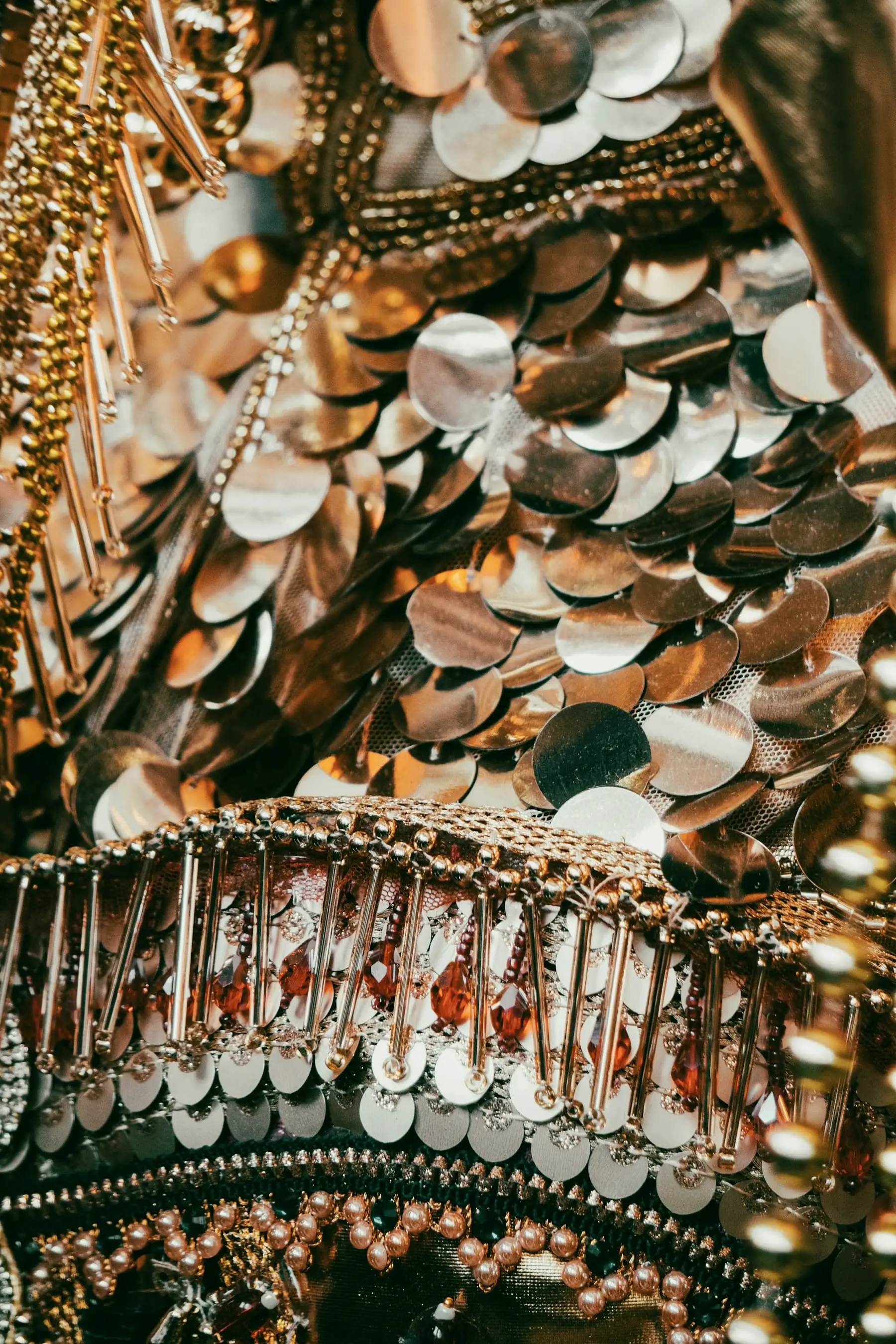
- Turn the piece over. Neat, secure stitching on the reverse signals care.
- Coils should sit evenly, with no gaps or kinks in the wire.
- The motif should hold its shape when you press gently around it.
- Machine work is flat and uniform. Handwork shows small, honest variation.
Care
- Dry clean only, with a cleaner who has handled metallic embroidery.
- Store flat or rolled in muslin with the embroidery facing outward.
- Keep away from perfume, damp and direct sun.