3 October 2026 · 4 min read
Choosing a sherwani for your wedding
Silhouette, fabric, colour and fit: a short guide to choosing a sherwani that suits you, the season and the bride's look.
A sherwani is worn for hours, photographed for decades and often kept for a lifetime. A little thought about four things makes the choice easier.
Start with the silhouette
A sherwani is a long coat, closed at the front, with a structured shoulder. Length varies: some sit at the knee, others fall lower. A slimmer cut reads modern. A fuller cut reads more traditional. Try both and watch how each moves when you sit, walk and raise your arms.
Choose the fabric for the day
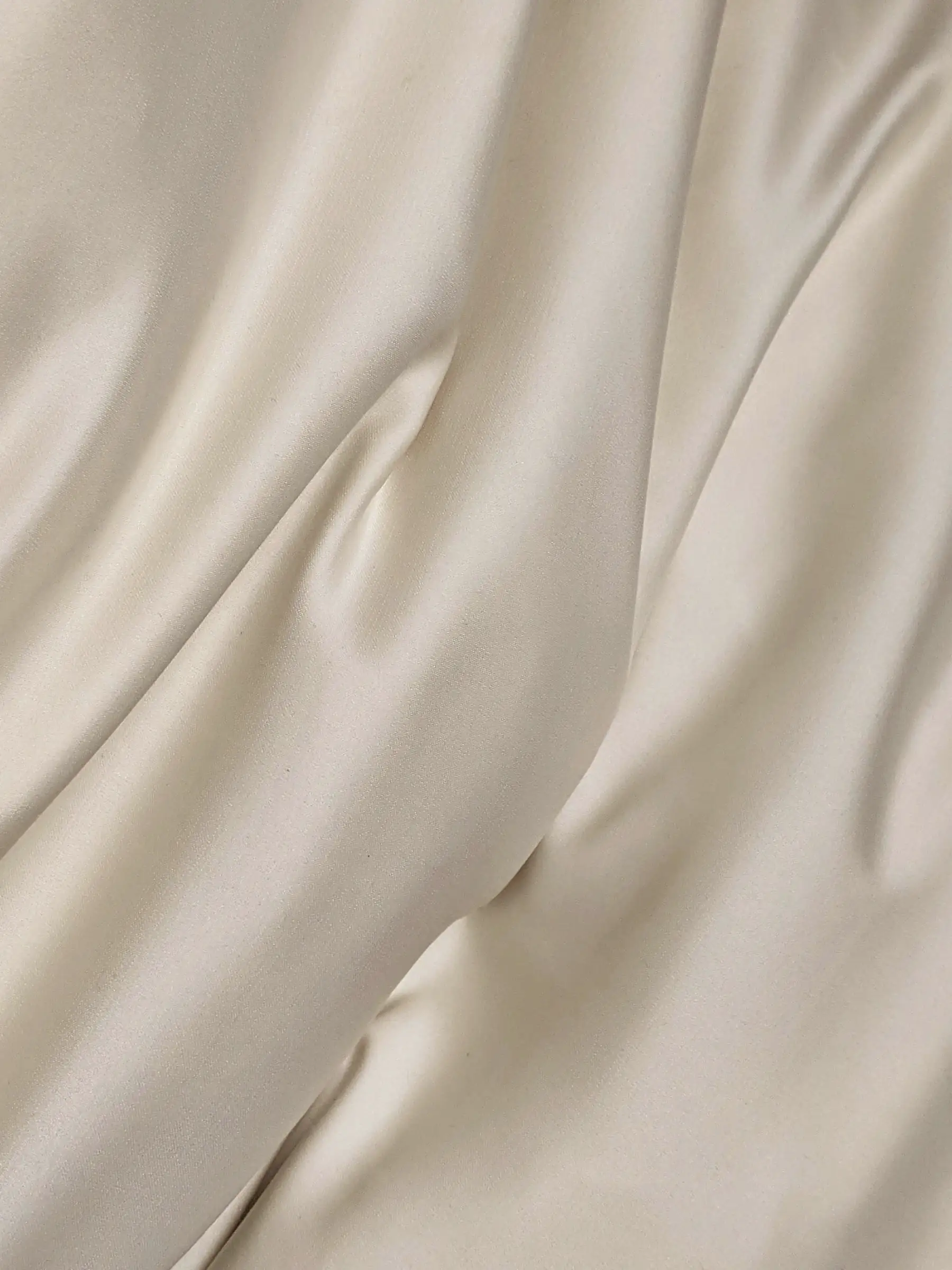
Light fabrics, such as a silk-blend or a fine brocade, are kinder in a warm venue or a summer wedding. Heavier cloth, such as velvet, suits a winter evening. Ask how a fabric behaves when you sit for a long ceremony.
Think about colour with the bride
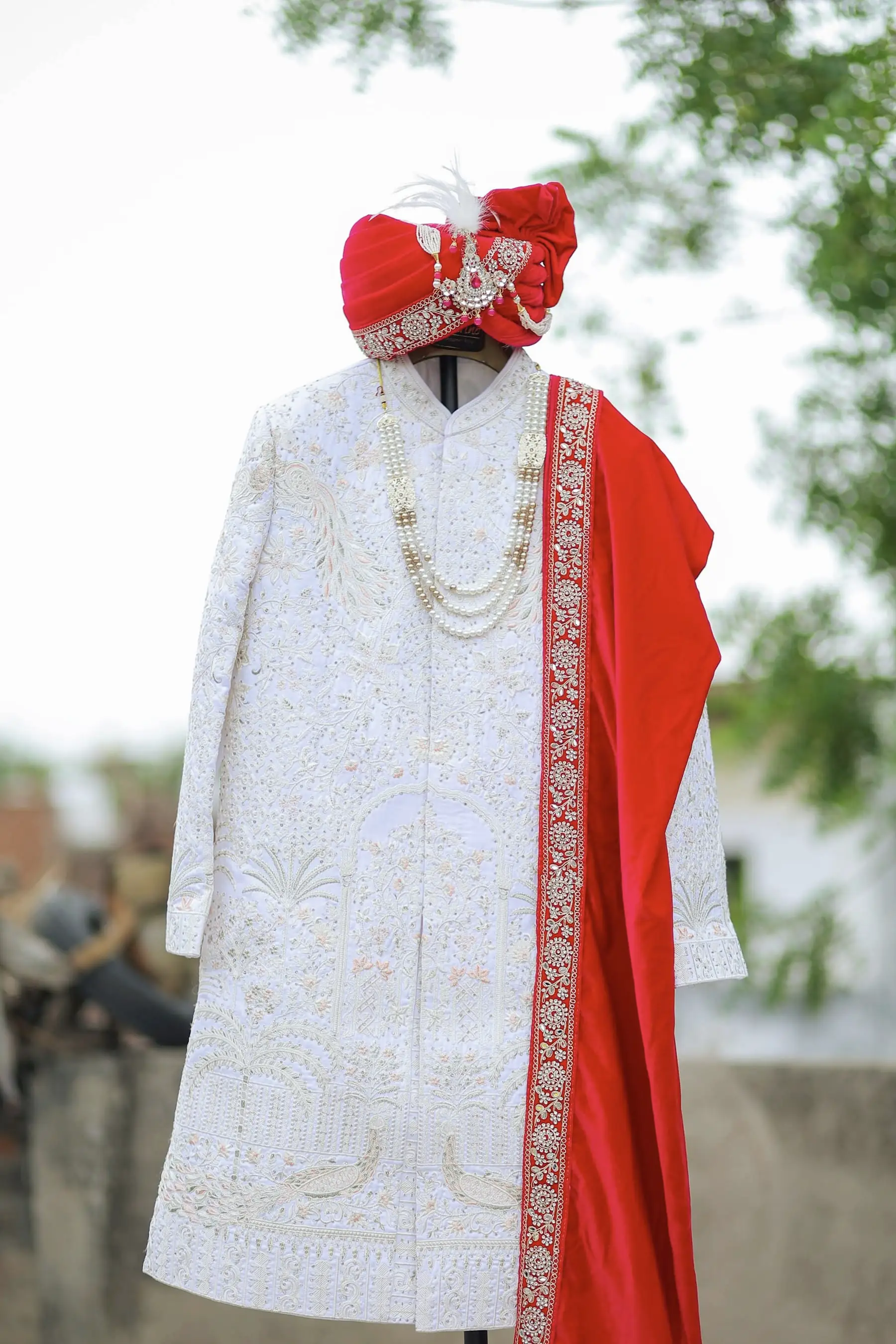
Ivory, gold and deep jewel tones photograph beautifully together. If the bride is in sindoor, an ivory and gold sherwani sits well beside her. If she is in pastel, a deeper tone gives balance. Bring a swatch of her outfit, or ask us to design the two looks together.
Embroidery: where, and how much
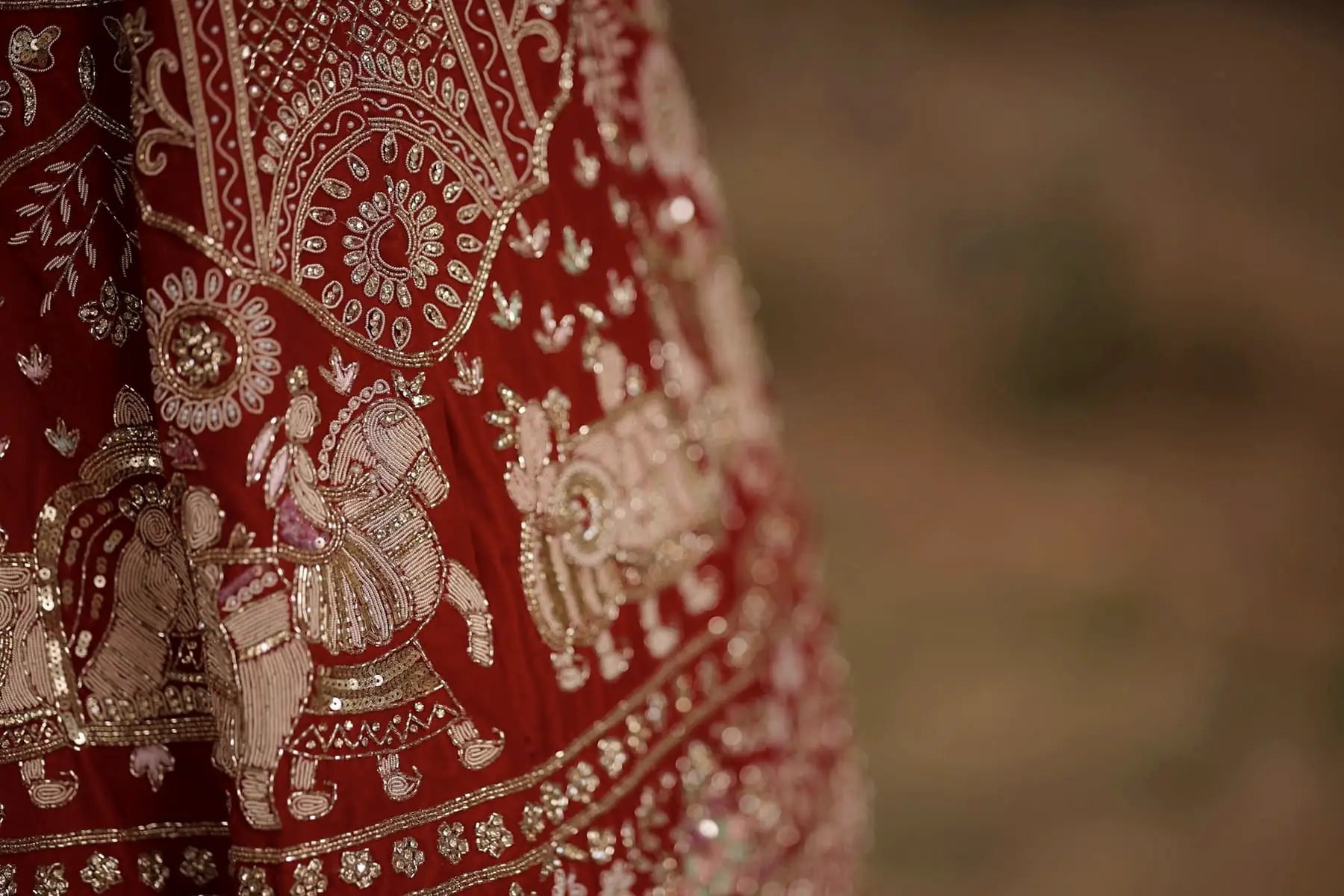
Embroidery can be concentrated at the collar, placket and cuffs, or spread across the body. Less embroidery asks more of the cut. More embroidery asks more of the fabric, which must carry its weight.
Fit decides everything
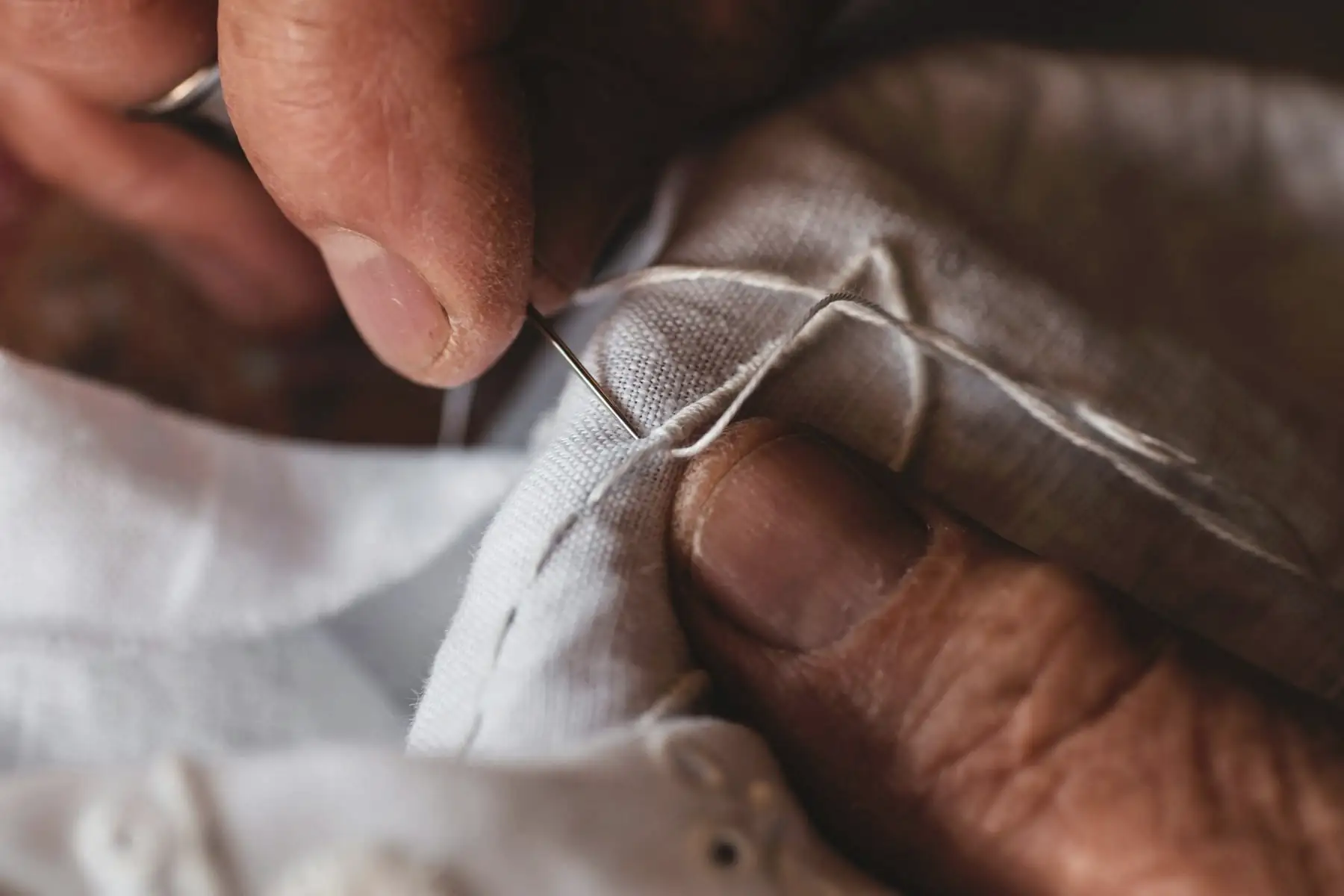
A sherwani should sit cleanly on the shoulders, close at the waist, and allow you to move your arms. It is cut to your measurements and refined over fittings. Allow time for them. For a groom travelling from abroad, we plan fittings on video.
Finish the look
A safa, a stole, a pair of mojaris and a pocket square complete the look. Choose them with the sherwani, not after.
See the men's collection, or book a groom appointment.