1 October 2026 · 4 min read
How to tell real zardozi from machine embroidery
Five things to look at when you hold an embroidered garment: the reverse, the wire, the stitches, the weight and the variation.
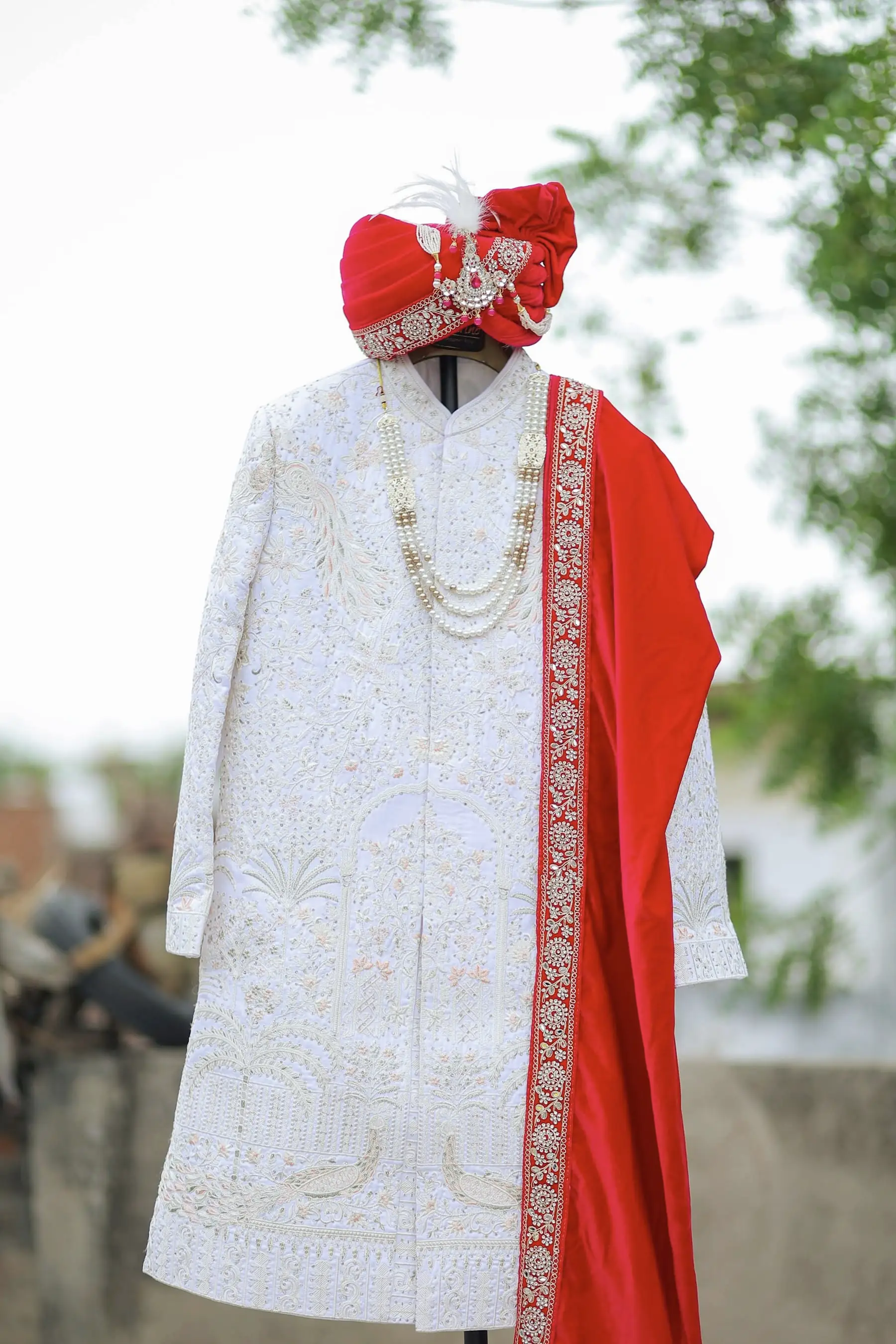
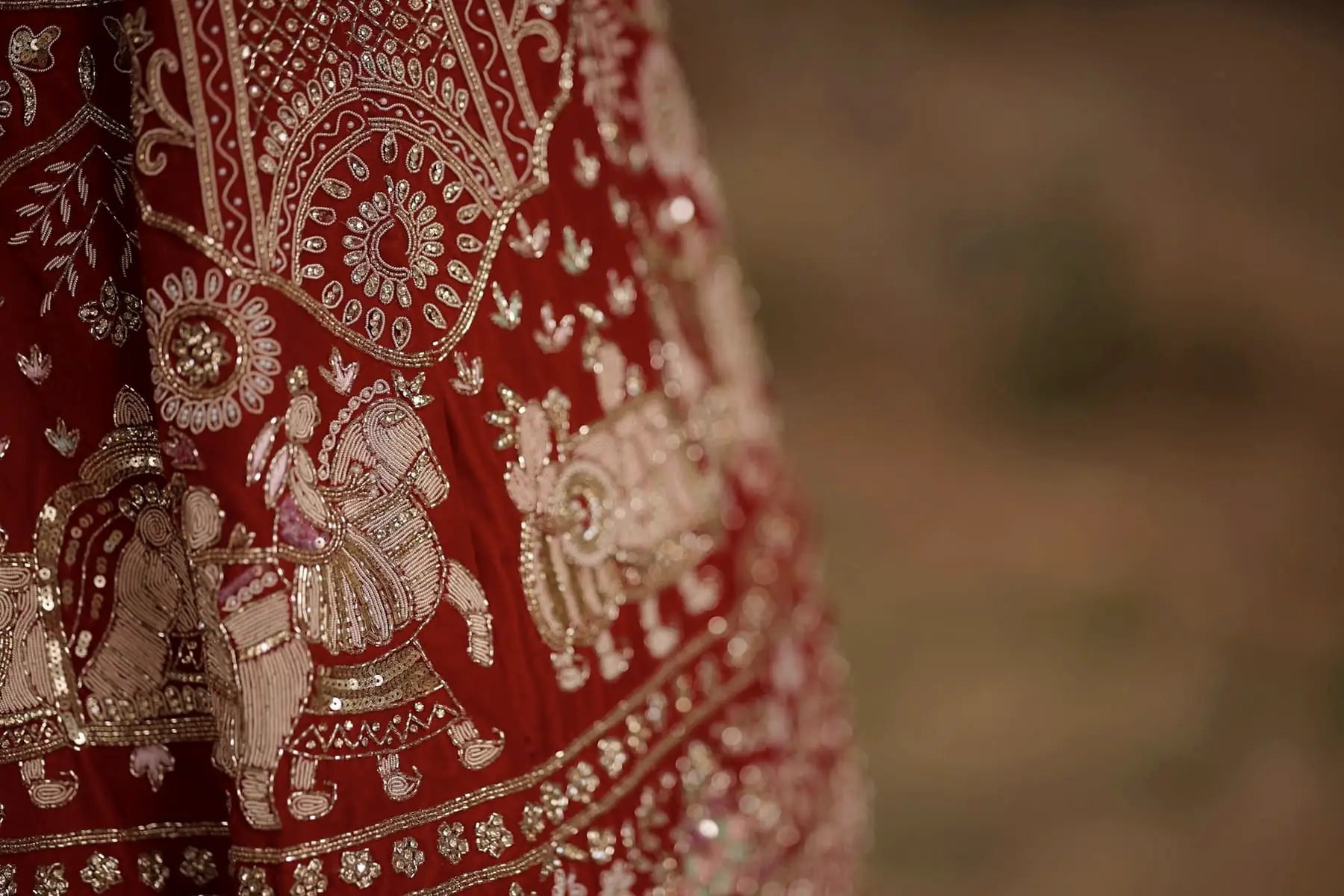
Zardozi is raised embroidery in metallic wire and thread. Machine embroidery can imitate its look from a distance. Up close, the two are very different, and a few minutes with a garment will tell you which you are holding.
Turn it over
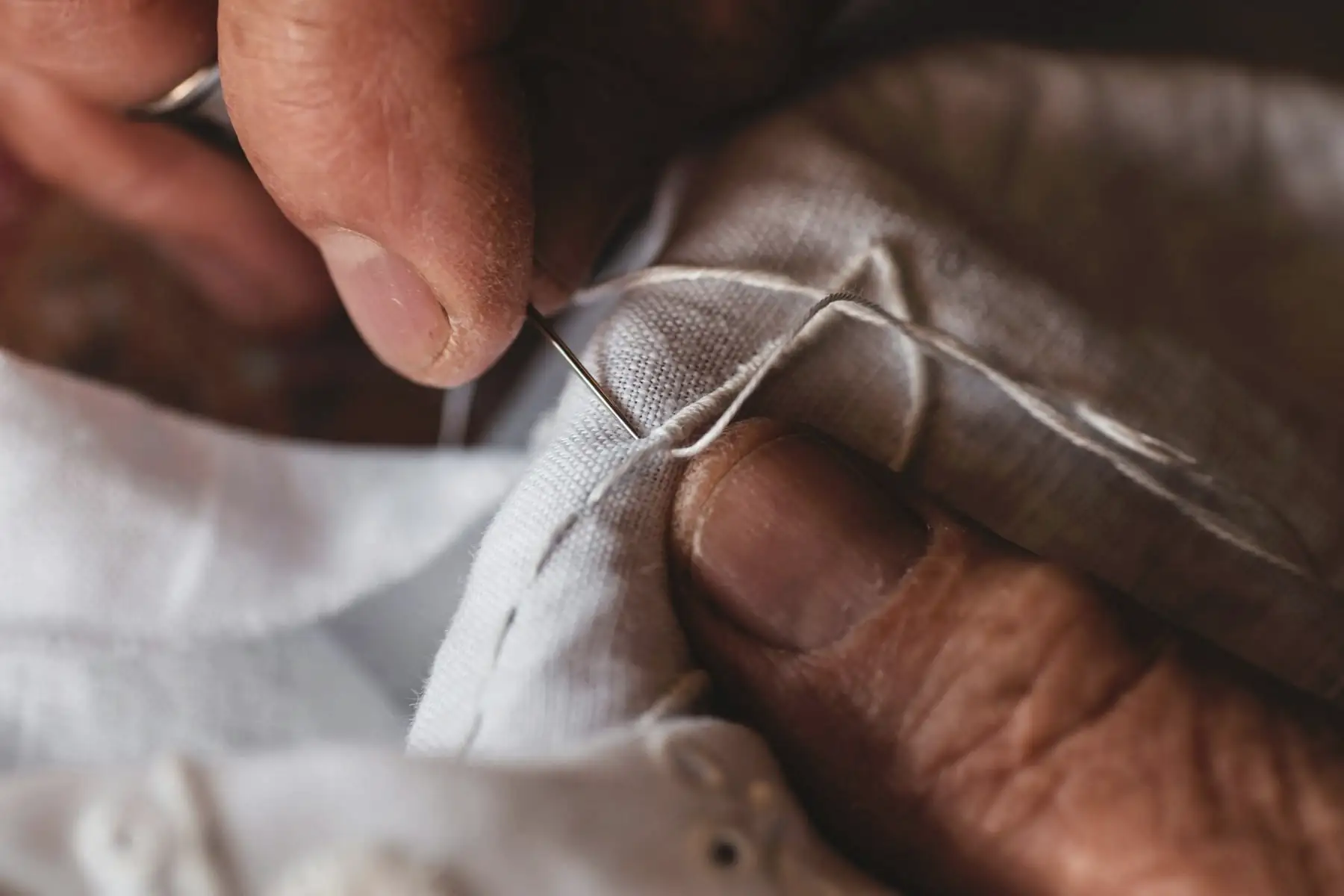
The reverse is the quickest test. Handwork has to be secured: you will see thread ends tucked in, and the wire passing through the cloth at the points where it is sewn down. Machine work shows a regular lattice of thread on the back, the same repeat every time.
Look at the wire
In zardozi the wire is laid on the surface and held down with tiny stitches. You can see the coil, and the small stitches at intervals. Machine embroidery usually uses a flat metallic thread that is stitched through, so it looks smooth and slightly flat.
Feel the weight
Real zardozi has body. A panel of it is heavier than the cloth around it, and it holds its shape when you press gently. Machine work lies flat and moves with the fabric.
Expect small variation
Two petals worked by hand are never identical. They are close, and the eye reads them as the same, but a closer look shows small differences in curve and spacing. Perfect repetition across a whole garment is a sign of a machine.
Check the edges
Look at where the embroidery ends. Handwork finishes cleanly around the motif. Machine work often shows a short run of loose thread, or a trimmed jump stitch.
Ask
A house that makes handwork well will tell you where, how long it took, and who made it. At Ozravé, those details are confirmed for each piece at launch, and we say plainly when they are not yet.
You can read how zardozi is made, step by step, in the craft library, and what to do to keep it in good condition in the craft library.