21 September 2026 · 5 min read
Zardozi, gota patti or chikankari? How to choose the embroidery for your outfit
Three embroidery traditions compared by weight, shine, occasion and care, to help you choose the right one for what you are wearing.
Embroidery is the first thing people notice and the last thing most of us choose with confidence. These three traditions suit different occasions, and knowing the difference makes the decision easier.
Zardozi: for weight, depth and ceremony
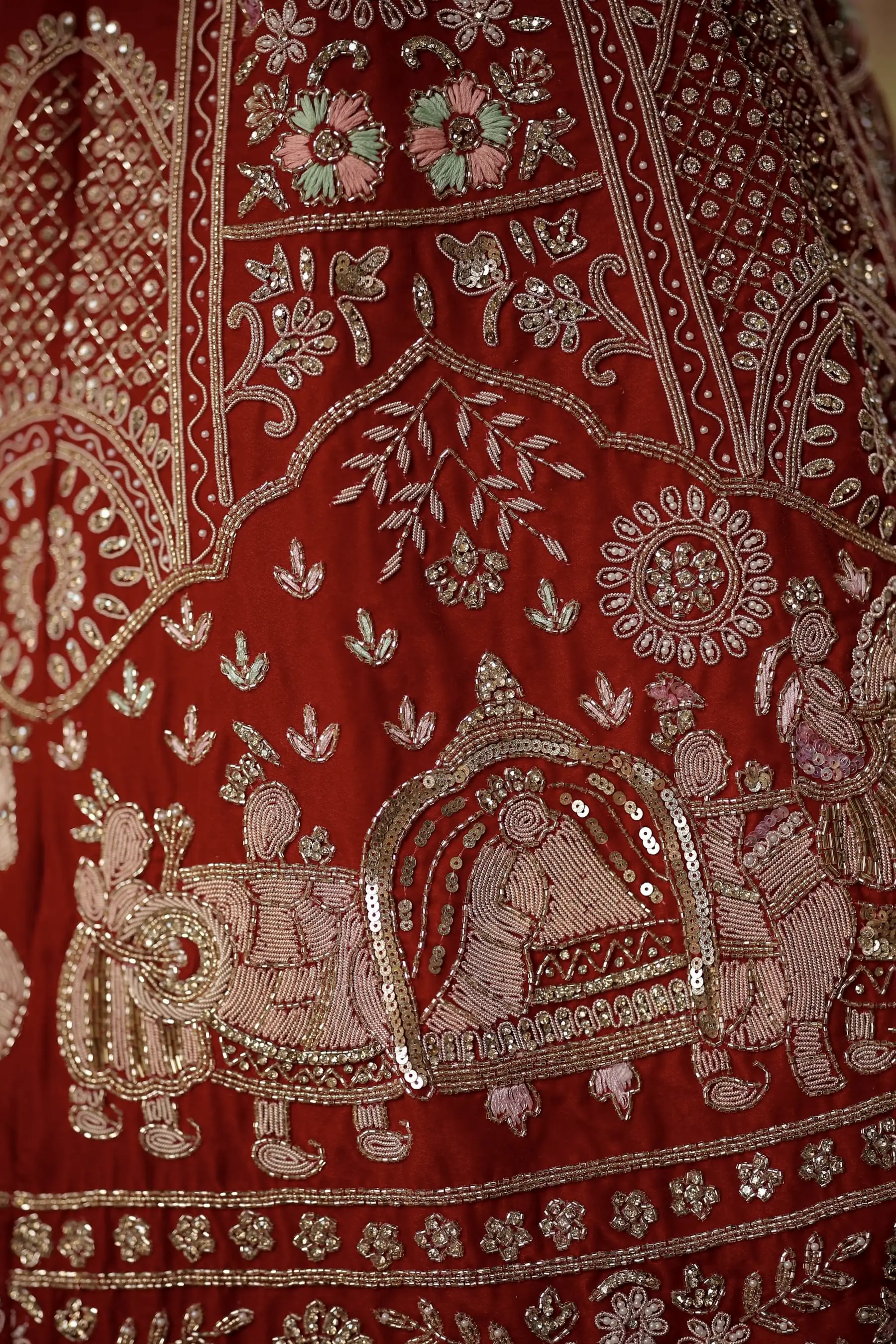
Zardozi is raised embroidery in metallic wire and thread, often with sequins and pearls. It has weight and dimension. It catches light from every angle.
- Best for: weddings, receptions, evening ceremonies.
- Feels like: rich, formal, traditional.
- Consider: it is heavier, so cut and fabric matter. Dry clean only.
Gota patti: for lightness and shimmer
Gota patti folds metallic ribbon into shapes and stitches it flat onto fabric. It shines without adding much weight.
- Best for: festive wear, sangeet, mehendi, dupattas.
- Feels like: bright, celebratory, easy to move in.
- Consider: it suits lighter fabrics such as georgette, and it travels well.
Chikankari: for quiet, tone-on-tone beauty
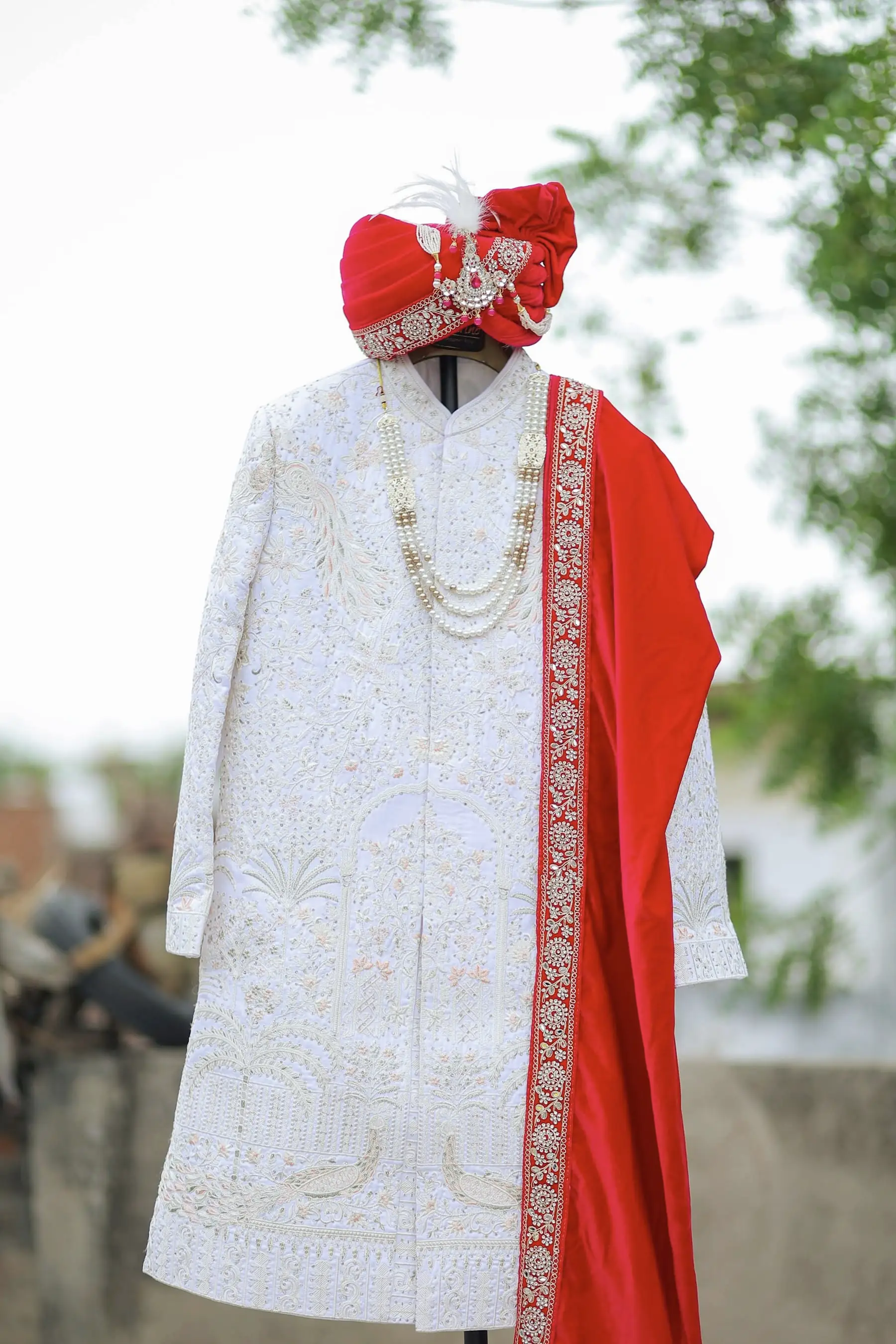
Chikankari is fine white-on-white shadow and knot stitching. It relies on texture, not colour, and reads best close up.
- Best for: daytime celebrations, pujas, summer weddings, kurta sets.
- Feels like: calm, refined, cool.
- Consider: it looks lovely on sheer cloth and in daylight. Gentle care.
Other techniques worth knowing
- Aari work is fine chain stitch, flexible enough for delicate vines or dense colour.
- Mirror work flashes light as you move, lovely for lively occasions.
- Mukaish scatters tiny points of metal like faint stars on sheer fabric.
- Brocade weaving builds the pattern into the cloth itself.
A simple way to decide
- Time of day. Daylight favours chikankari and gota patti. Evening favours zardozi and mirror work.
- Your role. The bride and groom can carry heavy zardozi. Guests often feel more at ease in lighter work.
- Season and venue. Warm venues call for lighter embroidery; winter weddings can take velvet and zari.
- Where you want the eye to go. Concentrate embroidery at the neckline and hem to draw attention; keep the body quiet if you prefer restraint.
One piece, two crafts
Techniques combine well. A chikankari kurta can be finished with a small line of zari at the collar. A gota patti dupatta can lift a plain lehenga. Ask for a combination when you book a consultation. Our craft library explains each technique in detail.